

Green collaboration
At the University of Copenhagen (UCPH), our ambition is to strengthen our collaboration and interaction with the outside world. This is particularly important in the green transition, where our combined research across the faculties provides a holistic perspective on challenges and solutions.
Collaborate with our researchers and students
If you represent a company, an organisation or a public authority, you can collaborate with our:
- researchers, for example in
- joint research projects
- strategic partnerships
- students, for example in connection with
- project work
- internships
- student jobs
- recruitment of graduates
Green Solutions Centre
Green Solutions Centre (GSC) is a central driving force at the University in developing holistic solutions for the green transition and a sustainable future. This work spans all our research disciplines and is carried out in collaboration with companies, municipalities, interest organisations and other parties.
GSC also runs a number of interdisciplinary research networks and ‘living labs’ projects and supports the education of graduates and researchers.
Examples of our collaboration
To give you a better understanding of the opportunities to collaborate with the University of Copenhagen, we have selected 11 examples of research projects carried out in close partnership between our researchers and a wide range of external partners.
Partnerships as Driver for Low-Carbon Transitions in Urban Food Systems
The food innovation hub Kitchen Collective and researchers from the humanities worked together to focus on the cultural aspects and driving forces behind a green transition of Copenhagen's food system.
The project critically examined how sustainability-oriented food entrepreneurs, together with established players, operate in 'transition-driven partnerships' aimed at innovating and accelerating the development of sustainable urban food systems.
Read more about Partnerships as Driver for Low-Carbon Transitions in Urban Food Systems
Cattle Crossroads – Researching Danish livestock production for the future
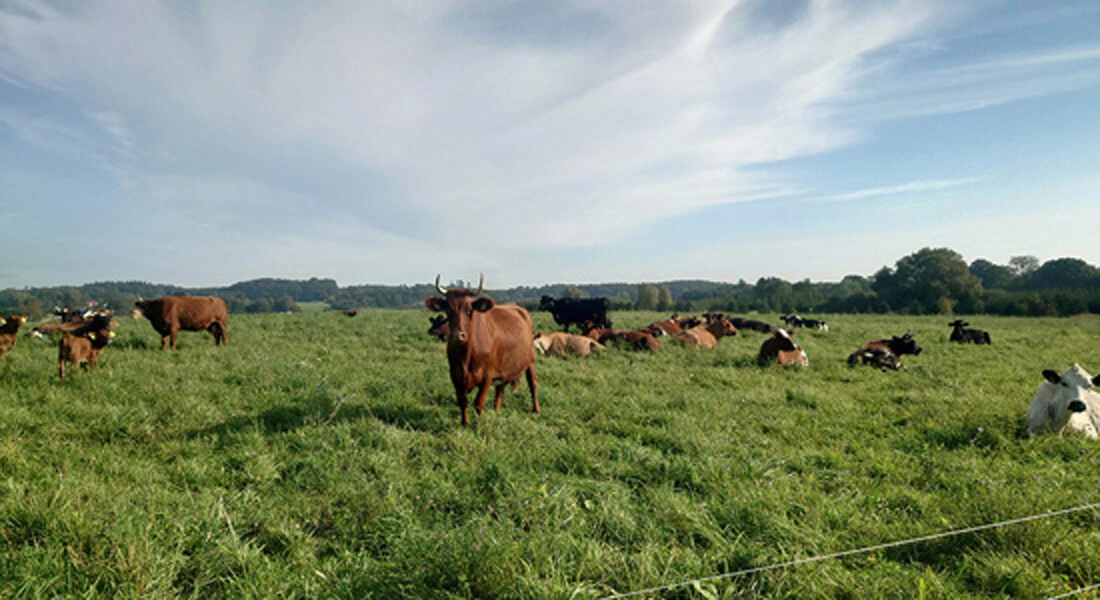
In partnership with the organic farm Kollemosegaard, researchers from the Faculty of Humanities and the veterinary sciences examined cattle production in detail.
The project explored the knowledge required to produce cattle for a green future. Its aim was to develop the capacity to navigate the crossroads facing livestock production in an era of climate change.
Read more about Cattle Crossroads – Researching Danish livestock production for the future
H2ignite
In close collaboration with European knowledge and business partners and authorities, our researchers are working on a project on the transition to green hydrogen in the North Sea region.
They bring together business, innovation and policy with the aim of ensuring climate transition, energy security and economic growth in the region.
Green transition and the Law of Shipping (GreenLaSH)
Together with, among others, Danish Shipping and A.P. Moller – Maersk, Norden, our researchers from the Faculty of Law are working to reduce CO2 emissions from shipping. They do this by analysing the consequences at industry level and developing regulatory initiatives at international (IMO) and EU level.
The main focus is on contract and liability issues relevant to various players in the shipping industry, including shipowners, charterers, cargo owners and ports.
The Danish Model for Citizen Engagement in the Renewable energy Transition (DART)
This project focuses on public resistance, citizen engagement and democratic participation in connection with the green transition in Denmark. One of its aims is to design new models that promote citizens' involvement in democratic processes.
The research project is carried out in collaboration with, among others, European Energy, Copenhagen Infrastructure Partners, the Mærsk Mc-Kinney Møller Center for Zero Carbon Shipping and our researchers across the Faculty of Social Sciences and the Faculty of Law.
Read more about The Danish Model for Citizen Engagement in the Renewable energy Transition
Narratives and co-creation in multifunctional land consolidation
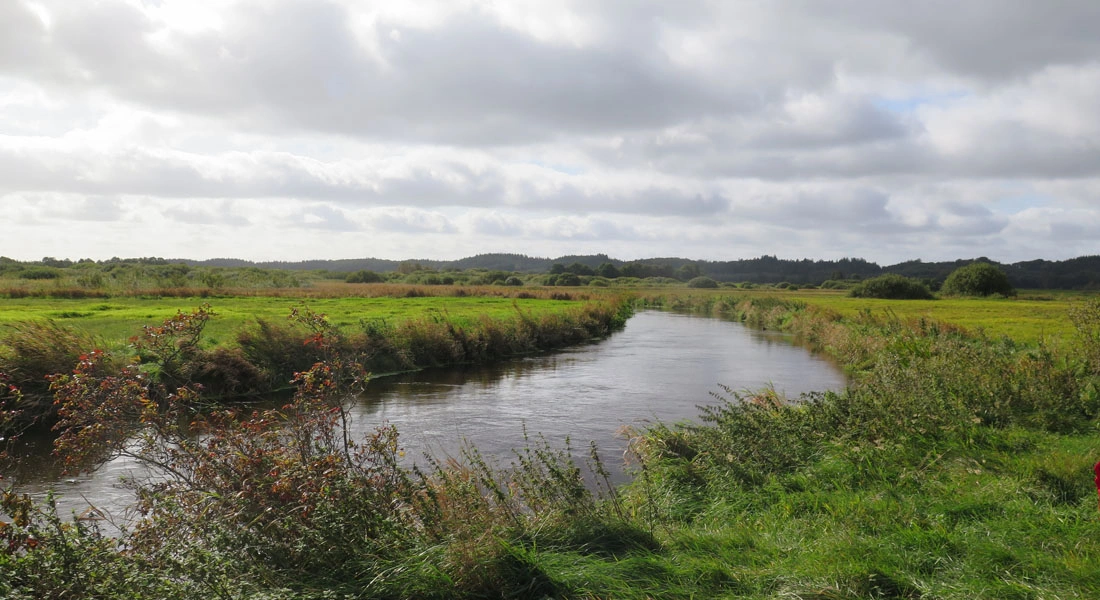
In close collaboration with practice partners from the Danish Nature Agency in Himmerland and the municipalities in Mariagerfjord, Randers and Viborg, researchers from anthropology and landscape architecture are studying three cases. They all focus on multifunctional land allocation in southern Himmerland – Glenstrup Lake, Nørreådalen and Skalsådalen – as a way to reduce CO2 emissions from agriculture.
The project examines how narratives about the landscape are used in negotiations between many different interests, and develops narratives as a method to ensure local co-creation.
Read more about Narratives and co-creation in multifunctional land consolidation
Building Resilience to Climate-Sensitive Mosquito-Borne Viral Diseases
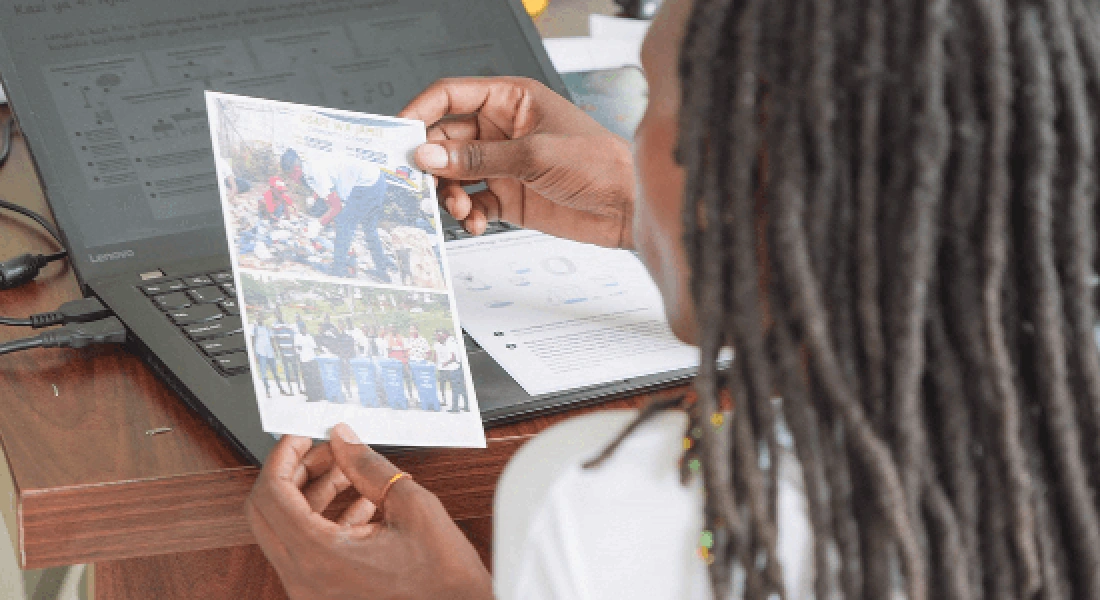
How can we identify and test sustainable interventions to minimise the risk of hospital-acquired infections and the epidemic spread of climate-sensitive mosquito-borne viral diseases, such as dengue and Zika?
This is being investigated by researchers from the health sciences in collaboration with knowledge institutions, authorities and other partners across Zanzibar.
The aim is to prevent hospitals from becoming hotspots for the initiation and spread of infectious disease outbreaks.
Read more about the Mosquito-Borne Disease (MBD) Free project
Mitigation of climate impacts from plant production with biochar from straw and biogas digestates (MitiChar)
Researchers from plant science, in collaboration with Stiesdal, HedeDanmark, Agrovi and Aarhus University, investigated the potential of biochar to mitigate the climate impact of plant production. Agricultural plant production emits large amounts of N2O – a greenhouse gas that is 300 times stronger than CO2.
The aim of MitiChar was to identify mechanisms that enable biochar to reduce N2O emissions. In addition, the project examined biochar's ability to store carbon and improve soil health, as well as the barriers to its implementation.
Advancing the Quality of plant-based Raw materials and Ingredients for Food applications (AQRIFood)
In this project, the University of Copenhagen has joined forces with Aarhus University, Aalborg University and a wide range of partners from the agriculture and food sector – including Carlsberg, Arla Foods, DRYK, Crispy Food, Organic Plant Protein, DLG, DAKOFO, Chr. Hansen, Novozymes and Danish Crown.
The aim is to develop high-quality plant-based foods. This requires Danish agriculture to be able to scale up the production of oats, peas and faba beans more quickly. Today, plant-based foods made from these crops do not meet the necessary quality requirements.
Bioflavoring brewer’s spent grain by edible mushroom mycelium in solid-state fermentations (MYCOFLAVOR)
In collaboration with Copenhagen Business School and external partners in food technology – Swan Neck Bio and Circular Food Technology (AGRAIN) – our researchers from the Department of Food Science (UCPH FOOD) are investigating how flavour variants based on spent grain (the residual product) can be introduced as an alternative to meat.
The goal is to produce a natural, less processed product and examine the environmental and economic sustainability of the fermented product.
Photochemical eradication of methane from animal production (PERMA)

A research team from the Department of Chemistry at the University of Copenhagen has joined forces with external partners on a project aimed at removing methane from the air. They have demonstrated that this can be achieved using the reactor built for the project.
The research is carried out in collaboration with Aarhus University, Arla, Skov and the UCPH spin-out company Ambient Carbon.